
Driving through Salt Lake City offers some of the most beautiful views in the country, but the unique terrain also presents specific challenges for your vehicle. Whether you are navigating the steep grades of Parleys Canyon, dealing with the stop-and-go traffic on I-15, or managing slick winter roads, your braking system is the single most critical safety feature in your car. When that system is compromised, you put yourself, your passengers, and other drivers at risk.
It is easy to take your brakes for granted until they stop working the way they should. Ideally, you want to catch issues long before a complete failure occurs. Recognizing the early warning signs of wear and tear can save you money on extensive repairs and keep you safe on the road. The team at Pyle Automotive understands the specific demands that Utah driving places on your vehicle and is prepared to help you maintain optimal performance.
Many drivers ignore subtle changes in how their car handles, attributing it to road conditions or simple aging. However, your car often communicates with you well before a breakdown. By paying attention to specific auditory, visual, and tactile cues, you can determine when it is time to schedule a professional inspection. This guide outlines the major indicators that you need brake repair and why Pyle Automotive is your trusted partner in maintaining vehicle safety.
High-Pitched Squealing or Squeaking Noises
One of the first and most obvious indicators that your vehicle requires attention is a piercing sound coming from your wheels. Most modern brake pads are manufactured with a built-in safety feature known as a wear indicator. This is a small metal tab designed to scrape against the brake rotor once the pad material has worn down to a specific level. This screeching sound is essentially a call for help from your car, letting you know that the pads are thin and need replacement soon.
If you hear this noise, it is generally not an emergency yet, but it is a sign that you should not delay. Ignoring this high-pitched squeal will eventually lead to the sound disappearing, only to be replaced by a much worse noise. When the squealing stops because the wear indicator has worn off, you are likely grinding metal on metal. Bringing your vehicle to Pyle Automotive at the first sign of squealing allows their technicians to swap out the pads before the rotors are damaged, keeping your repair costs lower.
Grinding Sounds When Coming to a Stop

Depositphotos 147309665 XL scaled e1701731194218
If the squealing noise has been ignored or if the wear happened rapidly, you might start hearing a loud grinding or growling sound when you press the brake pedal. This is a severe symptom. The grinding sound typically means that the brake pads have completely worn away, and the metal backing plate of the pad is now clamping directly onto the metal brake rotor.
This metal-on-metal contact creates significant friction and heat, rapidly destroying the rotor. It can also cause the caliper to overextend or stick. Once your brakes reach this stage, simple maintenance turns into a more complex and expensive brake repair job. At this point, stopping power is significantly reduced, making the vehicle dangerous to drive. Pyle Automotive recommends towing the vehicle or driving immediately to their shop if you hear grinding, as brake failure could be imminent.
Vibration or Pulsing in the Steering Wheel or Pedal
When you apply the brakes, the experience should be smooth and consistent. If you feel a vibration in the steering wheel or a pulsing sensation in the brake pedal, it often points to an issue with the rotors. Rotors are the metal discs that your brake pads clamp onto to stop the wheels. Over time, the intense heat generated from braking, especially during mountain driving around Salt Lake, can cause these rotors to warp or wear unevenly.
Warped rotors prevent the brake pads from making even contact with the surface. This uneven contact causes the shuddering sensation you feel inside the cabin. This issue is particularly common for drivers who frequently descend steep hills or tow heavy loads, as these activities generate excessive heat. The technicians at Pyle Automotive can measure the thickness and variation of your rotors to determine if they can be resurfaced or if they need to be replaced entirely to restore a smooth ride.
The Car Pulls to One Side
brake replacement
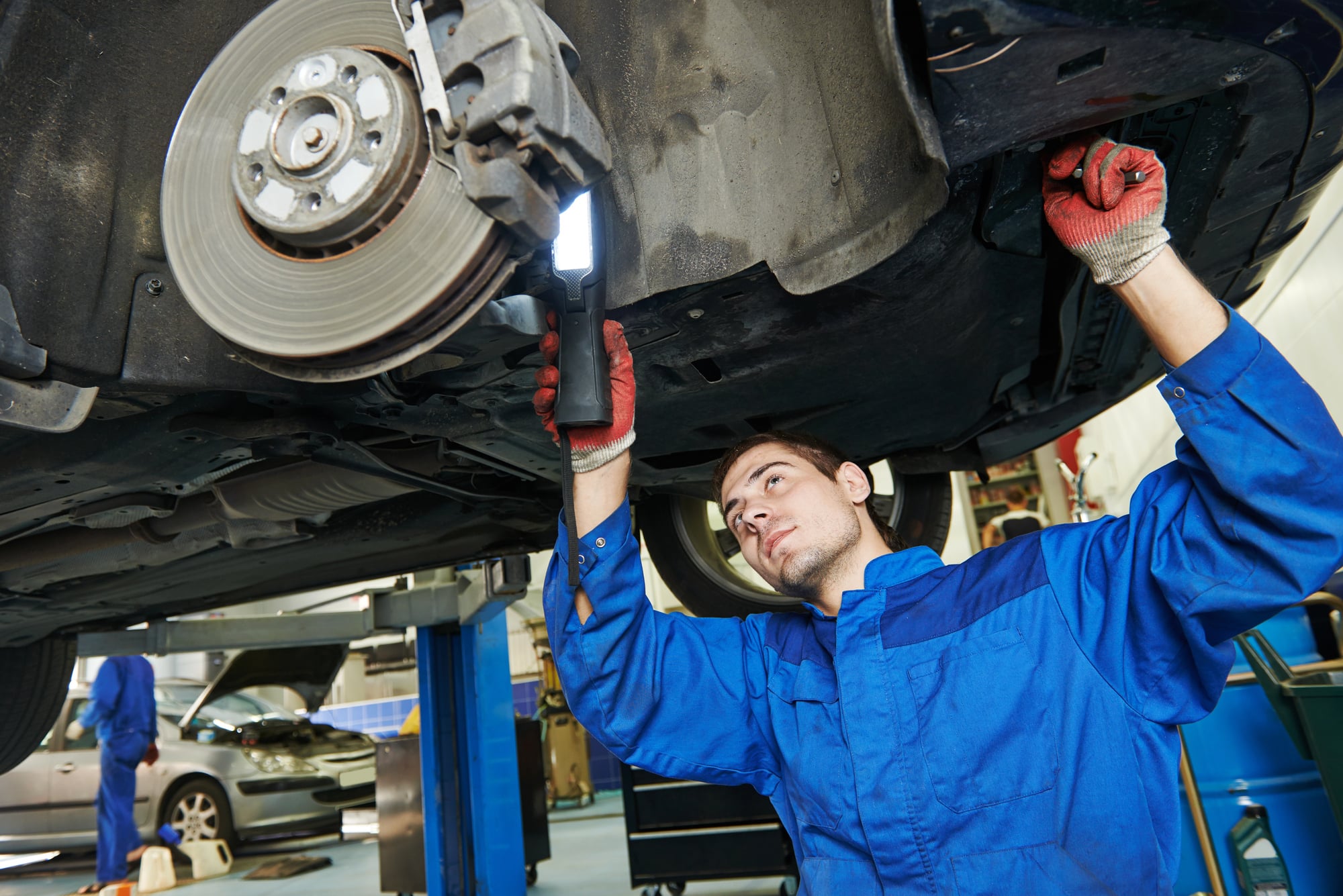
Applying the brakes should result in your car slowing down in a straight line. If your vehicle feels like it is tugging to the left or right when you press the pedal, you have a significant safety issue. This pulling sensation usually indicates that the brake linings are wearing unevenly or that there is foreign matter in the brake fluid. However, the most common culprit is a stuck caliper.
A caliper is the mechanism that applies pressure to the brake pads. If a caliper freezes due to corrosion or debris, it may fail to apply friction to one wheel, or conversely, it may fail to release friction. This imbalance causes the car to veer sharply. This is dangerous because it can cause you to unintentionally drift into another lane during a sudden stop. Pyle Automotive can inspect your calipers and hydraulic system to ensure that braking force is applied evenly to all wheels.
Burning Smells After Driving
Smelling a sharp, chemical odor after you have been driving is a sign that your brakes or clutch are overheating. If you have been driving aggressively or riding the brakes down a steep canyon road, you might smell this. In that case, the best course of action is to pull over safely and let the brakes cool down to prevent brake fade—a condition where the brakes temporarily stop working due to heat.
However, if you smell this burning odor during normal city driving, it could indicate that a caliper is seized and the brakes are dragging while you drive. This constant friction generates dangerous heat levels and can lead to a fire or total wheel lockup. Pyle Automotive can inspect your wheels for dragging brakes and correct the mechanical failure causing the friction.
The Brake Warning Light is On

brake replacement
Dashboard warning lights are designed to alert you to problems that you might not be able to feel or hear yet. There are two different lights to watch for. The first is the Anti-Lock Braking System (ABS) light. If this is illuminated, your normal brakes will likely still work, but the emergency anti-lock feature that prevents skidding is disabled.
The second is the main brake system warning light. This typically comes on if the parking brake is engaged, but if the brake is released and the light remains on, it usually signals a drop in hydraulic pressure or low brake fluid. Low fluid often means there is a leak somewhere in the system. Because the brake system is a sealed loop, fluid does not just evaporate; it goes somewhere. A leak is a critical failure that needs immediate attention from Pyle Automotive to ensure you do not lose braking power entirely.
Prioritize Your Safety with Pyle Automotive
Your vehicle is likely one of your largest investments, but more importantly, it transports your most valuable cargo—your family and friends. Ignoring the signs of failing brakes is a gamble that is never worth taking. Whether it is a subtle squeak or a dashboard warning light, these signs are your car’s way of telling you it needs help.
Residents of Salt Lake City have a reliable partner in Pyle Automotive. With a reputation for honesty, quality workmanship, and deep knowledge of local driving conditions, they are the premier choice for brake repair in the area. Do not wait until a small noise becomes a major failure. If you notice any of the signs mentioned above, bring your vehicle to Pyle Automotive for a thorough inspection and drive away with the peace of mind that comes from knowing you can stop safely every time. Reach out today by calling (801) 467-7455.