

Dashboard warning lights are visual signals your vehicle uses to communicate problems ranging from minor maintenance reminders to serious safety hazards. Colors matter: red means stop immediately, yellow or orange means caution, and blue or green are informational. Pyle Automotive recommends checking your owner’s manual whenever an unfamiliar light appears, since symbols can vary slightly between manufacturers.
Few things cause more confusion for drivers than a sudden light flashing on the dashboard. Is it serious? Can you keep driving? Should you pull over right now? These questions matter because dashboard warning lights exist for a reason: your vehicle’s internal systems are constantly monitoring performance, and when something falls outside normal range, the dashboard becomes the messenger.
Learning to interpret these signals isn’t just useful knowledge for car enthusiasts. It’s practical information that can save you from costly repairs, dangerous breakdowns, or safety risks on the road. Pyle Automotive, a company known for its automotive electronics and accessories, emphasizes that understanding your car’s warning system is one of the simplest ways to stay ahead of mechanical issues before they escalate.
This guide breaks down what dashboard warning lights mean, how to tell the difference between a minor alert and an emergency, and what steps to take when a light appears.
What do the colors of dashboard warning lights indicate?
Dashboard warning lights follow a consistent color-coding system across most vehicle manufacturers, and understanding this system is the fastest way to gauge urgency. Red lights signal an immediate problem that requires you to stop the vehicle safely and address the issue before continuing. Examples include the oil pressure warning, the brake system alert, and the engine temperature light. Ignoring a red warning can lead to engine damage, brake failure, or other severe consequences.
Yellow or orange lights indicate a condition that needs attention soon but isn’t necessarily an emergency. The check engine light is the most common example. While it doesn’t always mean you need to pull over immediately, it does mean a diagnostic check should happen as soon as possible. Blue and green lights, on the other hand, are purely informational. These typically indicate that a system, such as high beams or cruise control, is simply active.
Pyle Automotive notes that drivers who understand this three-tier color system can respond appropriately without panicking over every illuminated icon, while still taking red warnings seriously every single time.
Which dashboard warning lights are the most important to recognize?

Car Maintenance Lights
Some symbols appear so frequently that every driver should be able to identify them instantly. The check engine light, shaped like an engine outline, is one of the most misunderstood indicators because it can mean anything from a loose gas cap to a failing catalytic converter. The oil pressure light, resembling an old-style oil can, signals that your engine isn’t receiving adequate lubrication, a problem that can cause catastrophic engine damage within minutes if ignored.
The battery or charging system light indicates an issue with your vehicle’s electrical system, often pointing to a failing alternator or battery connection problem. The brake system light can mean anything from low brake fluid to a more serious hydraulic issue, and it should never be dismissed. The tire pressure monitoring system (TPMS) light, shaped like a tire cross-section with an exclamation point, alerts drivers to underinflated tires, which affect both fuel efficiency and handling safety.
According to Pyle Automotive, drivers who keep a laminated warning light reference chart in their glove compartment, or who bookmark their owner’s manual’s digital version, tend to respond faster and more accurately when something unexpected appears.
How should you respond when a warning light turns on?
The appropriate response depends heavily on the color and the specific symbol, but there are general principles that apply across almost every situation. First, avoid ignoring any new light, even if your car seems to be running fine. Warning systems are designed to catch problems before they become noticeable through performance alone.
Second, use color as your initial guide for urgency. A red light means you should find a safe place to stop as soon as possible and assess the situation, possibly calling for roadside assistance. A yellow light gives you more flexibility, but it shouldn’t be left unaddressed for more than a few days. Third, consult your owner’s manual the moment an unfamiliar symbol appears. Manufacturers sometimes use slightly different icons, and the manual will clarify exactly what your specific vehicle is indicating.
Pyle Automotive also recommends investing in an OBD-II scanner, a small device that plugs into your car’s diagnostic port and reads the specific error code triggering your check engine light. These scanners have become increasingly affordable and user-friendly, giving everyday drivers the same diagnostic insight once reserved for mechanics.
Why do warning lights sometimes turn off on their own?
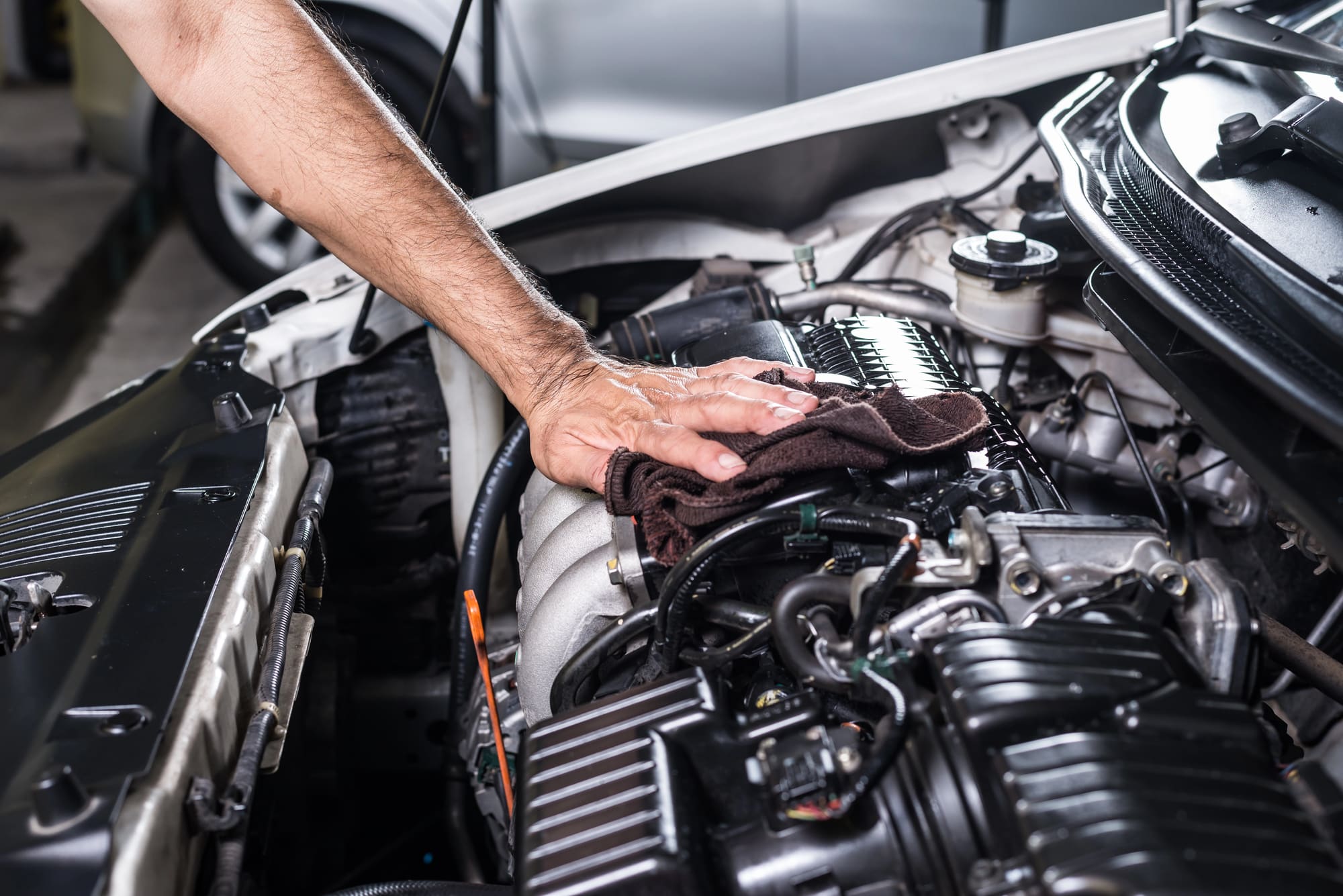
car engine
It’s common for a warning light, particularly the check engine light, to disappear without any repair taking place. This usually happens when the triggering condition was temporary or intermittent, such as a loose gas cap that gets tightened or a sensor that briefly misreads due to weather conditions. However, a light turning off doesn’t always mean the underlying issue is resolved.
Many vehicles store the diagnostic code even after the light turns off, meaning a mechanic or OBD-II scanner can still identify what caused the alert. Pyle Automotive advises against assuming a problem has vanished simply because the dashboard looks normal again; a brief diagnostic check can confirm whether further action is needed.
What happens if you ignore a dashboard warning light for too long?
Ignoring warning lights, especially red ones, often transforms a manageable repair into a significant expense. A low oil pressure warning left unaddressed can seize an engine entirely, turning a simple oil top-off into an engine replacement costing thousands of dollars. Similarly, a brake warning light ignored for weeks can result in brake failure, putting both the driver and others on the road at serious risk.
Even yellow warnings carry consequences over time. A check engine light caused by a failing oxygen sensor might seem harmless initially, but it can reduce fuel efficiency by a noticeable margin and eventually damage the catalytic converter if left unresolved. Pyle Automotive points out that the cost of early diagnosis is almost always lower than the cost of delayed repair, making prompt attention to warning lights a financially sound habit, not just a safety one.
Take warning lights seriously, not fearfully
Dashboard warning lights aren’t designed to alarm drivers unnecessarily. They’re an early communication system built to protect both your vehicle and your safety. Understanding the color-coded urgency system, recognizing the most common symbols, and responding promptly can prevent small issues from becoming expensive emergencies.
Pyle Automotive encourages drivers to treat their dashboard as a conversation with their vehicle rather than a source of anxiety. The next time an unfamiliar light appears, resist the urge to panic or ignore it. Instead, check your owner’s manual, consider a diagnostic scan, and address the issue with the urgency its color suggests. A little attention now can save considerable time, money, and stress down the road. Reach out by calling (801) 467-7455.